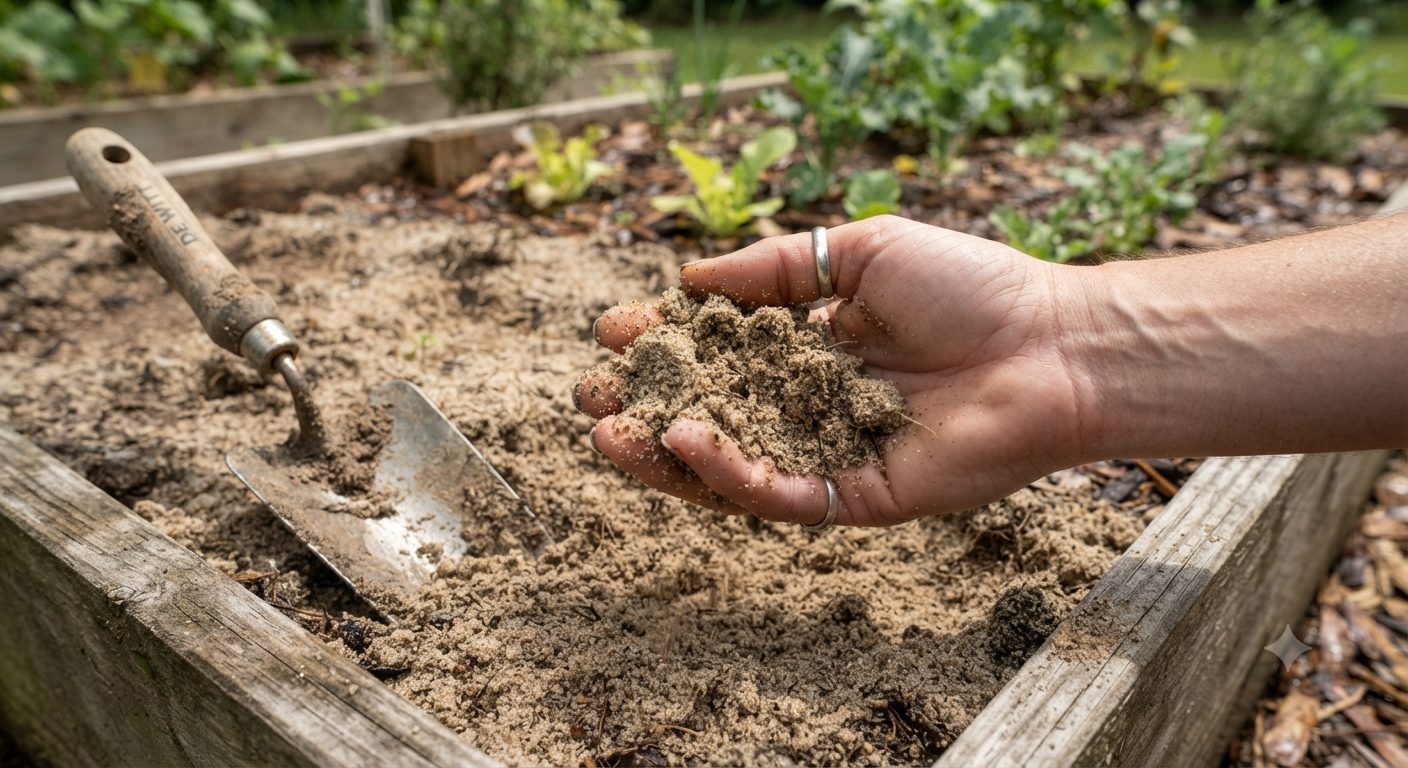
Florida sandy soil drains quickly, warms quickly, and is easy to dig, but it does not naturally hold water or nutrients well. This is why Florida gardeners often struggle with plants drying out, fertilizer washing away, and vegetables looking hungry even after feeding.
UF/IFAS describes many Florida soils as naturally sandy and low in organic material, which can contribute to nutrient leaching and low nutrient levels.
Why Florida Soil Is So Sandy
Much of Florida sits on sandy parent material. In many yards, the soil feels loose, gritty, and fast-draining. That can be helpful for plants that hate wet feet, but it creates challenges for vegetables, fruit trees, herbs, and many ornamentals.
Sandy soil has large particles. Water moves through those particles quickly. Nutrients can move with the water, leaving the root zone before plants can use them.
The Main Problems With Sandy Soil
Florida sandy soil commonly creates four problems:
1. It dries out quickly. Even after rain or irrigation, the upper soil layer can dry fast. That stresses seedlings and shallow-rooted crops.
2. It does not hold nutrients well. Fertilizer can leach below the root zone, especially during heavy rain or overwatering.
3. It has low organic matter. Organic matter improves water-holding capacity, nutrient retention, and soil life. UF/IFAS notes that amending Florida soil with compost or manure increases organic matter and helps soil retain moisture.
4. It can make watering confusing. A garden may look dry on top but still have moisture deeper down. Or it may be wet after a storm but dry again quickly during hot weather.
Sandy Soil Is Not "Bad Soil"
Sandy soil is not a failure. It simply needs a different strategy. Advantages include:
- Easier digging
- Good drainage
- Faster warming
- Lower risk of long-term waterlogging
- Good potential for raised beds and food forests when improved over time
The goal is not to replace all your soil. The goal is to build organic matter and manage water more carefully.
Best Crops for Sandy Soil
Many crops can grow well in sandy soil once it is improved. Root crops often appreciate loose soil, and many herbs prefer sharp drainage. But heavy-feeding vegetables need more support.
Florida vegetable gardens on sandy soil generally benefit from soil testing and proper pH management. UF/IFAS recommends a best pH range of about 5.8 to 6.3 for vegetable gardens on sandy soil.
Common Mistakes
- Adding fertilizer without improving organic matter
- Watering on a fixed schedule without checking soil moisture
- Leaving soil bare in hot sun
- Assuming compost once is enough forever
- Planting heavy feeders in unimproved sand
What To Do Today
Pull back mulch or dig a small hole and check your soil. Does it hold moisture? Does it crumble? Is it pale, loose sand? Then add organic matter where you are actively growing plants and cover bare soil with mulch.
Building better soil is the biggest lever
Our Soil Building Guide walks through the specific amendment schedule we use for sandy Zone 9b soil.
Shop on Etsy →If you'd rather get one seasonal soil tip at a time, the newsletter covers that too.