
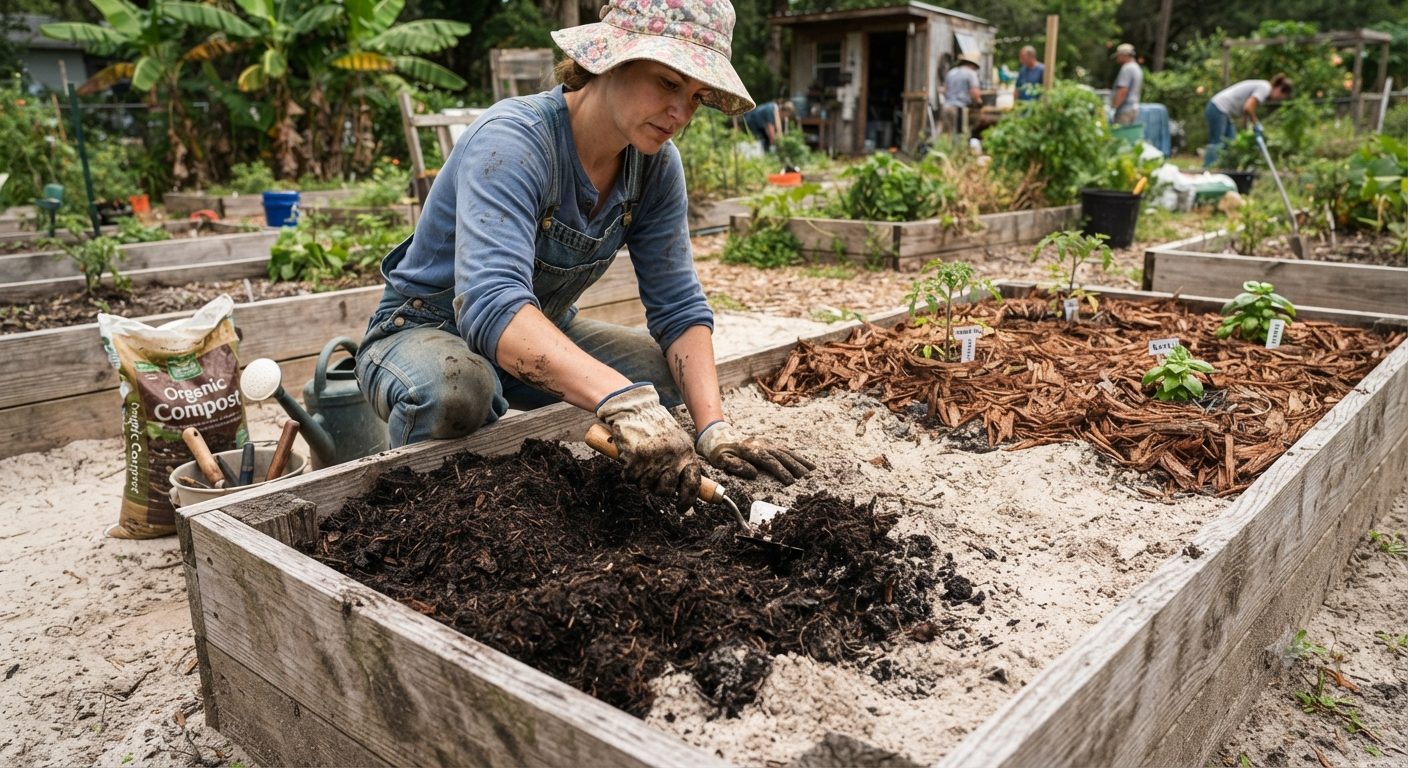
The best way to improve sandy soil in a Florida vegetable garden is to add organic matter consistently, keep soil covered with mulch, water based on soil moisture, and use fertilizer carefully so nutrients stay available to plant roots. Sandy soil improves gradually, not instantly.
UF/IFAS recommends Florida-Friendly organic amendments such as compost or manure to increase nutrient content and help soil retain moisture.
Start With Organic Matter
Organic matter is the foundation of sandy soil improvement. Good options include:
- Finished compost
- Aged manure
- Chopped leaves
- Grass clippings from untreated lawns
- Pine bark fines
- Cover crop residue
- Worm castings
Organic matter helps sandy soil hold more moisture and nutrients. It also feeds soil organisms that support healthier plant growth.
Keep Soil Covered
Bare sandy soil heats up, dries out, and loses organic matter quickly. Mulch protects the surface and helps reduce moisture swings. Good mulch options include:
- Straw
- Pine needles
- Shredded leaves
- Wood chips around paths and perennials
- Compost mulch
- Chopped plant material
Use Compost Correctly
Compost is helpful, but it is not magic. A thin layer once a year may not be enough for heavy-feeding vegetables in sandy soil.
For vegetable beds, add compost before planting and continue replenishing organic matter between crops. In containers or raised beds, refresh the growing mix as nutrients are used up and organic matter breaks down.
Manage pH
UF/IFAS recommends a pH range of about 5.8 to 6.3 for vegetable gardens on sandy soil, and notes that no adjustment is usually needed if soil pH is between 5.5 and 7.0.
This is why soil testing matters. Guessing can lead to over-liming, nutrient lockout, or unnecessary amendments. The UF/IFAS Extension Soil Testing Laboratory processes home garden samples for a low fee through your county extension office.
Water Deeply, But Not Blindly
Sandy soil needs careful watering. Too little water stresses plants. Too much water can push nutrients below the root zone. UF/IFAS recommends checking vegetables every day or two and watering when the top half-inch to inch of soil is dry or plants begin to wilt.
The goal is consistent moisture, not soggy soil.
Use Fertilizer Carefully
Because sandy soil leaches nutrients easily, small, steady feeding is often better than dumping on a large amount at once. Follow label directions and local recommendations, especially during rainy periods.
Slow-release fertilizers, compost-based fertility, and split applications can help reduce waste.
Common Mistakes
- Tilling in fresh wood chips directly around vegetables
- Leaving beds bare between crops
- Overwatering after fertilizing
- Adding lime without a soil test
- Expecting one compost application to permanently fix sand
What To Do Today
Add a layer of compost to your active growing bed, cover it with mulch, and start checking soil moisture before watering. If you have never tested your soil, make soil testing your next step before adding lime or major amendments.
The full feed-cover-water sequence
Our Soil Building Guide includes a Zone 9b-specific amendment schedule — including our go-to aloe drench trick for feeding soil biology.
Shop on Etsy →If you just want the short version each month, subscribe to the newsletter instead.