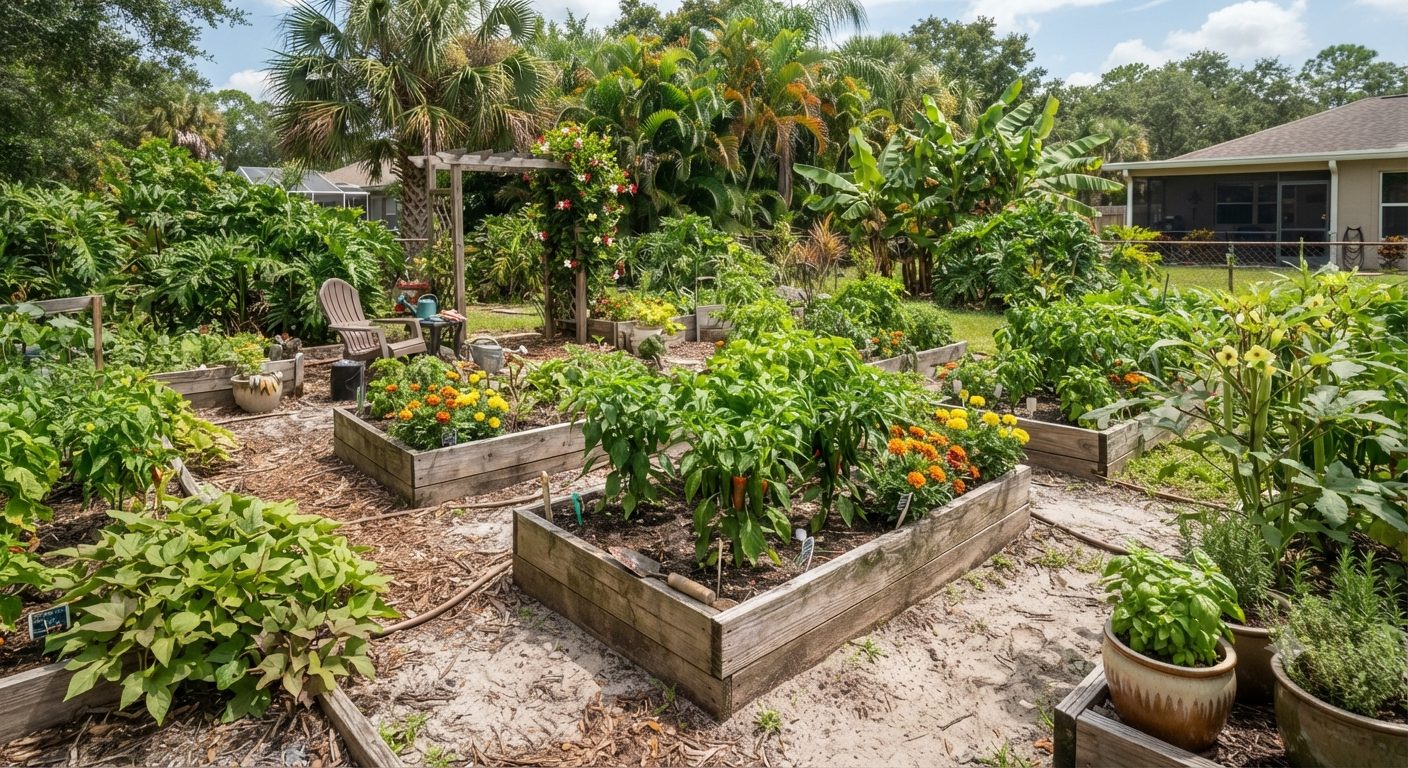
Florida gardening is different because Florida does not follow the same gardening calendar as most of the country. Heat, humidity, sandy soil, heavy summer rain, pest pressure, and mild winters all change how plants grow here. Many vegetables that thrive in northern summer gardens struggle in Florida's summer heat, while cool-season crops often perform better in fall, winter, and early spring.
That does not make Florida gardening harder. It just means gardeners need to follow Florida timing instead of generic gardening advice. UF/IFAS provides a full gardening calendar broken out by region, because North, Central, and South Florida each have different seasonal windows.
Florida Has More Than One Gardening Season
In much of the United States, gardeners think in terms of spring planting and summer harvests. Florida works differently.
Many Florida gardeners can grow food through fall, winter, and spring. Summer can be productive too, but it favors heat-loving crops such as okra, sweet potatoes, eggplant, peppers, southern peas, roselle, and similar warm-season plants. The Florida Vegetable Gardening Guide from UF/IFAS covers planting windows crop by crop, and notes that Florida's climate allows some vegetables that are uncommon elsewhere in the continental United States.
This is one of the biggest mindset shifts for new Florida gardeners: summer is not always the main vegetable season.
Florida Soil Drains Fast
Florida soils are often sandy, low in organic matter, and prone to nutrient leaching. That means water and fertilizer can move through the soil quickly instead of staying available to plant roots. UF/IFAS describes Florida soils as naturally sandy and low in organic material, which can lead to low nutrient levels and leaching.
For gardeners, this means soil building is not optional. Compost, mulch, organic matter, and regular soil improvement are part of long-term success.
Heat and Humidity Change the Rules
Florida heat is not just "warm weather." It affects flowering, pollination, water needs, disease pressure, and plant stress. Some crops stop producing well in extreme heat, while others thrive.
Tomatoes are a classic example — heat-tolerant cultivars and many cherry tomato varieties are better choices for the hottest months, according to UF/IFAS variety guidance in the same Vegetable Gardening Guide referenced above.
Watering Is Different Here
Florida gardeners deal with both drought stress and heavy rain. Sandy soil may dry quickly, but summer storms can saturate beds and encourage disease. UF/IFAS recommends checking vegetable gardens every day or two and watering when the top half-inch to inch of soil is dry or when plants begin to wilt.
That means watering should be based on soil moisture, not a rigid schedule.
Common Mistakes New Florida Gardeners Make
The most common mistake is following northern planting advice. A tomato variety, planting date, or seed-starting schedule that works in Ohio or Pennsylvania may fail in Central Florida.
Other common mistakes include:
- Planting cool-season vegetables too late
- Ignoring sandy soil
- Overwatering without checking soil moisture
- Choosing varieties that dislike heat
- Forgetting that pests and diseases can be active much longer here
What To Do Today
Start by identifying your Florida region, checking your current planting season, and choosing crops recommended for your timing. Then focus on improving your soil with compost and mulch before expecting perfect results.
Skip the research, follow the plan
Our Zone 9b Planting Calendar walks you month-by-month through exactly what to plant and when for Central Florida.
Shop on Etsy →Prefer free reminders instead? Get seasonal planting tips sent to your inbox each month.