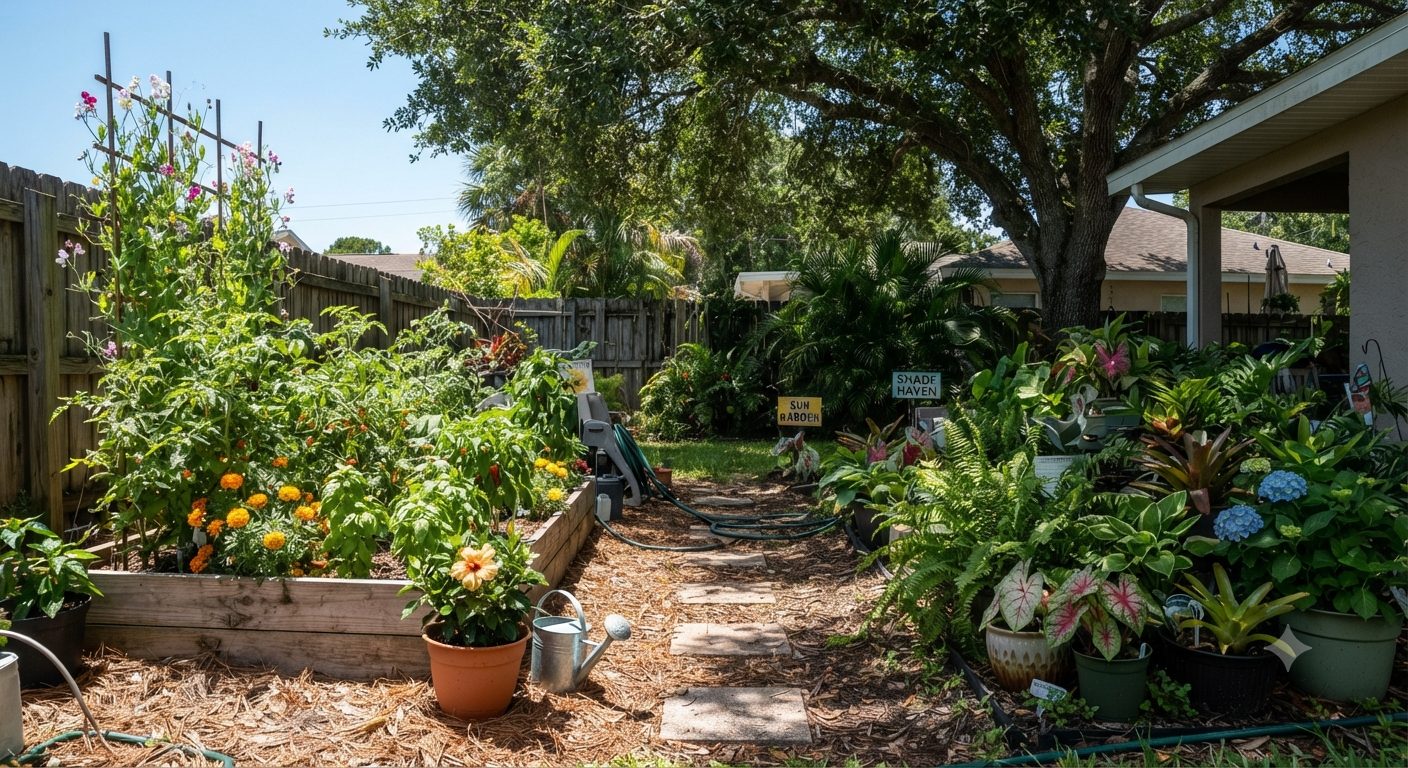
In Florida, "full sun" can be more intense than many gardeners expect. A plant label that says full sun may still struggle in harsh afternoon heat, especially during summer. Morning sun is usually gentler, while afternoon sun can create heat stress, rapid drying, leaf scorch, and poor vegetable performance.
Florida gardeners should think about both hours of sunlight and time of day.
What Full Sun Usually Means
In general gardening language, full sun usually means six or more hours of direct sunlight per day. UF/IFAS's Florida Vegetable Gardening Guide recommends locating a garden where it receives at least six hours of direct sunlight daily.
But in Florida, six hours of morning sun is not the same as six hours of late afternoon summer sun. The intensity of heat, humidity, and reflected light from walls, fences, pavement, or sand can make a location much harsher than the plant tag suggests.
Morning Sun Is Different From Afternoon Sun
Morning sun is usually cooler and easier on plants. Afternoon sun is hotter, especially from late spring through early fall.
A garden that receives sun from 8 a.m. to 2 p.m. may perform very differently from one that receives sun from noon to 6 p.m. This matters for:
- Lettuce
- Herbs
- Peppers
- Tomatoes
- Young transplants
- Container plants
- Leafy greens
Some Crops Need Relief in Summer
Many vegetables that love sun still struggle during Florida's hottest months. For other crops, part sun or filtered afternoon shade can extend productivity.
UF/IFAS research on vegetables and herbs grown under shade found that several crops can be successfully produced during summer using 30–45% shade cloth, with much of the research focused on peppers — several pepper cultivars performed well from an April transplant through a November finish under shade.
Watch the Plant, Not Just the Label
Plants tell you when sun is too intense. Signs include:
- Wilting every afternoon
- Crispy leaf edges
- Sunscald on fruit
- Bleached leaves
- Flowers dropping
- Soil drying extremely fast
- Stunted growth despite watering
If the plant recovers every evening, it may be heat stress. If damage keeps worsening, the site may be too harsh.
Containers Need Extra Attention
Containers heat up faster than in-ground beds. A dark nursery pot sitting on concrete in afternoon sun can become much hotter than the surrounding air.
For container gardens, part sun may be better than full afternoon exposure, especially for herbs, greens, and young transplants.
Common Mistakes
- Assuming "full sun" means "all-day Florida summer sun"
- Putting young transplants straight into harsh afternoon exposure
- Growing cool-season crops too late in hot sun
- Ignoring reflected heat from walls and pavement
- Forgetting that containers heat faster than ground soil
What To Do Today
Walk your garden at 9 a.m., noon, 3 p.m., and 5 p.m. Notice which areas get morning sun, afternoon sun, filtered shade, and reflected heat. This simple sun map will help you place crops more intelligently.
Setting up a container garden?
Our Container Gardening Guide covers crop-by-crop container sizing and heat-management specifics for Zone 9b.
Shop on Etsy →Or get one practical tip like this delivered monthly via the newsletter.